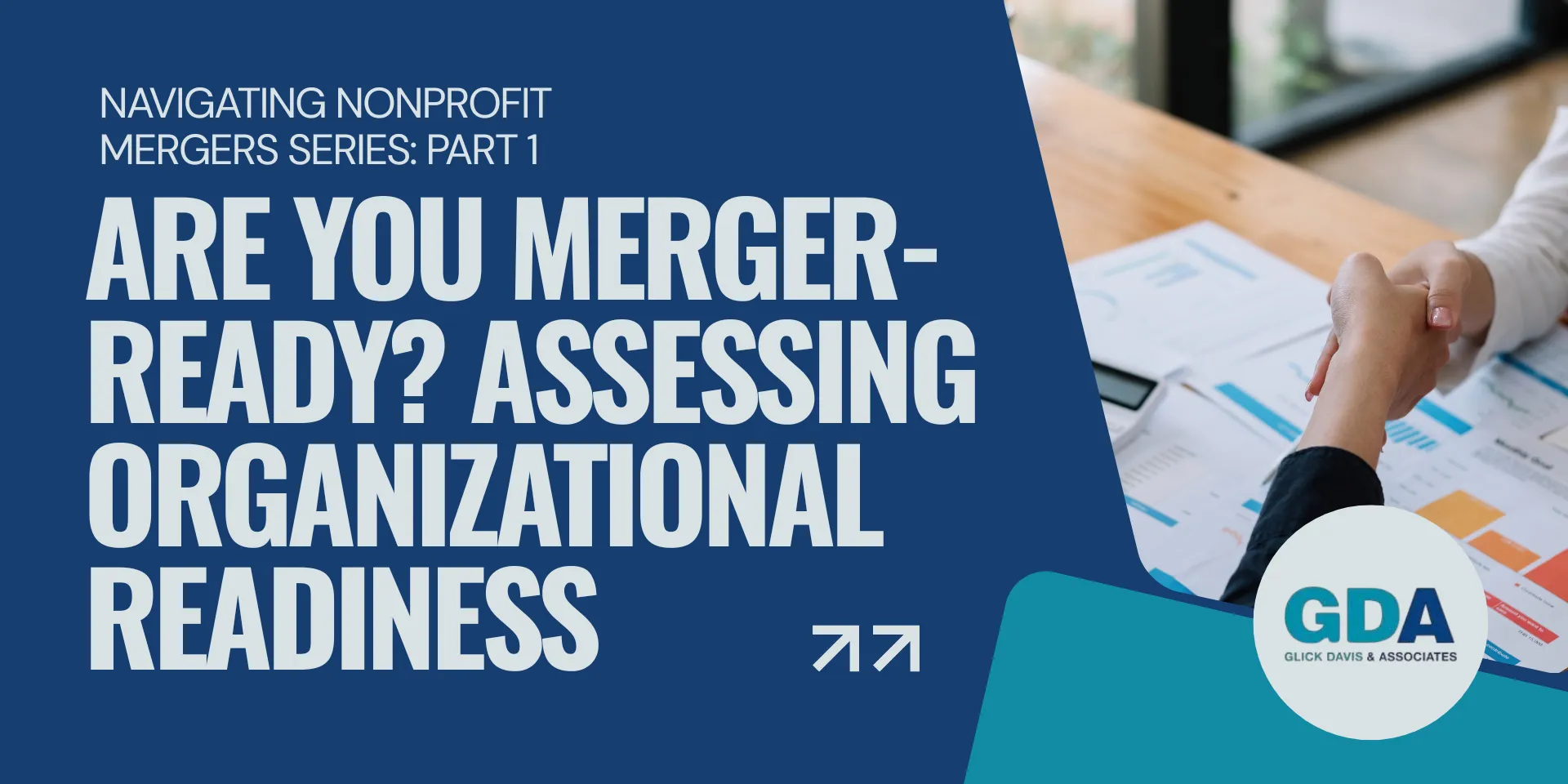
Navigating Non-Profit Mergers Series – Part 1: Are You Merger-Ready? Assessing Organizational Readiness
In today’s nonprofit landscape, collaboration is no longer optional. Many organizations are confronting the same questions:
“Should we merge to strengthen our mission, stabilize our finances, or expand our reach?”
The answer depends on one crucial factor: readiness.
Before entering merger conversations, leaders must understand their
organization’s financial position, board alignment, culture, and long-term goals. A
merger pursued too early or for the wrong reasons can derail rather than
strengthen impact.
This first installment in our four-part Navigating Nonprofit Mergers series offers a
practical framework to help you evaluate merger readiness; with tools, risks, and
guiding questions for boards and executives.
1. Why Nonprofit Mergers Are on the Rise
Economic pressures, evolving funding models, and leadership transitions have
accelerated consolidation across the sector.
Mergers can:
• Preserve vital community services when one partner is struggling.
• Create scale and sustainability in fragmented systems.
• Streamline overlapping missions to eliminate duplication.
At Glick Davis, we’ve seen mergers succeed most when they are mission-driven, not crisis-driven. The difference is intentionality.
2. Common Triggers for Merger Discussions
• Financial Instability: Declining revenue or expiring grants.
• Leadership Transitions: A retiring CEO or board shift can spark re-evaluation.
• Programmatic Overlap: Similar organizations serving the same population.
• Funder Encouragement: Foundations promoting alignment for efficiency.
• Geographic Expansion: Scaling regional programs or consolidating footprints.
These triggers are not warning signs in themselves, but they require clear-eyed
assessment.
3. The Merger-Readiness Checklist
Use this table with your board and senior leadership to gauge where you stand.
Readiness Factor
Yes
No
Notes
Mission and vision are clear and shared across leadership
Board is aligned and actively engaged in strategic discussions
Current financial statements and cash flows are accurate and up-to-date
Leadership team is stable and
trusted by staff
Organizational culture supports transparency and collaboration
Program outcomes and impact data are documented and credible
Stakeholders (funders, partners, community) understand your strategic goals
If more than two boxes in the “No” column are checked, your organization may need a period of strengthening before entering merger discussions.
4. Recommendations for Readiness Building
Conduct a Neutral Assessment
Engage a third-party consultant to assess mission alignment, financial health, and cultural compatibility. Internal bias can cloud readiness discussions.
Align Your Board Early
Create space for candid conversation—are board members open to collaboration or protective of institutional legacy? Alignment at this stage prevents conflict later.
Engage Funders in the Conversation
Major donors and foundations can be allies if they understand the long-term strategy. Involve them early, not after the decision is made.
Build a Communication Plan
Transparency with staff reduces anxiety. Draft talking points before rumors start.
Clarify Your Strategic Intent
Are you merging to survive, to scale, or to innovate? Each path has different resource and leadership needs.
5. Risks of Moving Too Fast
Rushing into merger discussions without preparation can create lasting harm:
Mission Drift: Urgency overshadows purpose.
Staff Uncertainty: Lack of information fuels turnover.
Board Division: Misaligned expectations erode trust.
Loss of Donor Confidence: Funder support weakens if communication lags.
A successful merger requires patience, planning, and clarity—not panic.
6. Key Decision: Survival or Strategy?
Ask yourself:
Are we merging to survive, or to strategically grow?
Merging for survival often means crisis management; merging for strategy means long-term transformation. Both can work, but the mindset must be explicit.
At this stage, your board should be able to answer:
• What problem are we solving through a merger?
• How will this advance our mission and community impact?
• Do we have the leadership capacity to manage change?
7. Readiness in Action: Practical Next Steps
Facilitate a Readiness Workshop.
Bring board and leadership together for a structured discussion around the checklist.
Document Baseline Metrics.
Capture current financial health, staffing, and program data before entering talks—so post-merger performance can be measured objectively.
Develop Scenario Plans.
What happens if we merge? If we partner instead? If we remain independent? Scenario planning helps define thresholds for action.
Assign a Point Person.
Identify one senior leader or committee to coordinate readiness and communication. Clear accountability is essential.
8. Conclusion: Readiness Is the Foundation for Impact
A merger can strengthen your organization’s mission or destabilize it. The difference lies in preparation.
By clarifying intent, aligning leadership, and ensuring transparency, nonprofits can enter merger discussions from a position of strength rather than desperation.
At Glick Davis, we help boards and CEOs navigate these pivotal moments with clear frameworks and expert facilitation, from readiness assessments through
integration.
Previous in the Series:
Introduction: When should Nonprofits Start Thinking About a Merger?
Next in the Series:
Part 2: Finding the Right Partner: How to Identify and Approach Potential Merger Opportunities
Navigating Nonprofit Mergers Blog Series

Nonprofit Turnaround: A Guide for Nonprofit Leaders, Consultants and Funders